Automated Vehicles for All (AVA)
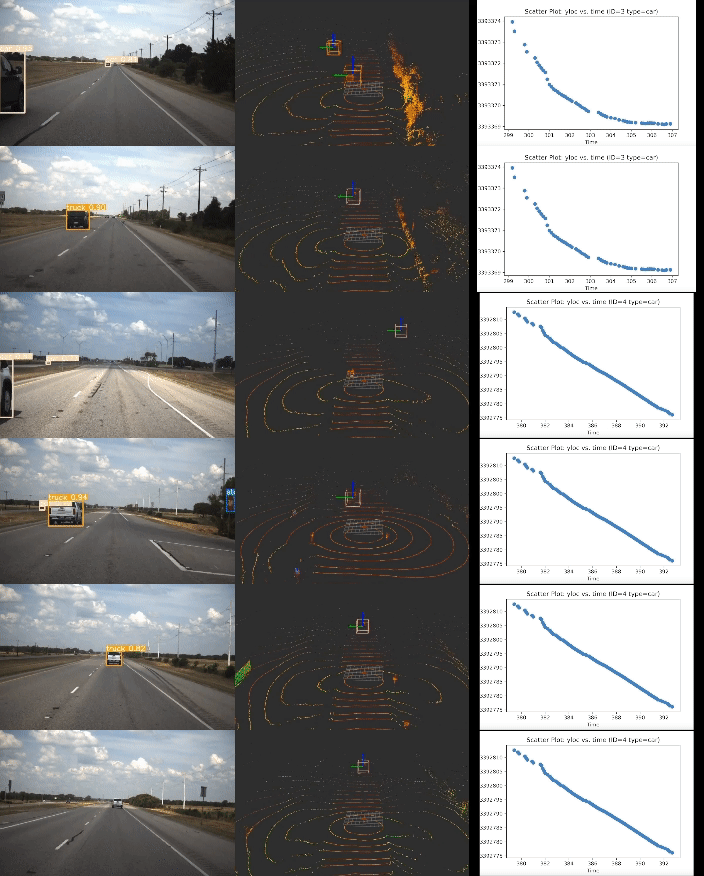 An exampel of data extraction pipeline
Project Overview
The Automated Vehicles for All (AVA) project is a four-year research effort funded by the U.S. Department of Transportation (USDOT). This project is dedicated to forging a systematic approach to achieve a safe integration of automated driving systems into the existing transportation infrastructure, especially on rural roads and multimodal driving enviorments. The project is a led by Dr. Reza Langari (TAMU), Dr. Alireza Talebpour (UIUC), Dr.Francis Assadian (UC Davis) and Dr. Samer Hamdar (GWU).
Aiming to enhance the safety and efficiency of automated driving systems in rural and multimodal driving environments, this project endeavors to not only evaluate these systems, but also generate a comprehensive dataset for automated vehicle safety analysis and rulemaking. Within this project, I served as a graduate research assistant, contributing across multiple teams including perception, data analysis, and safety testing.
My contribution
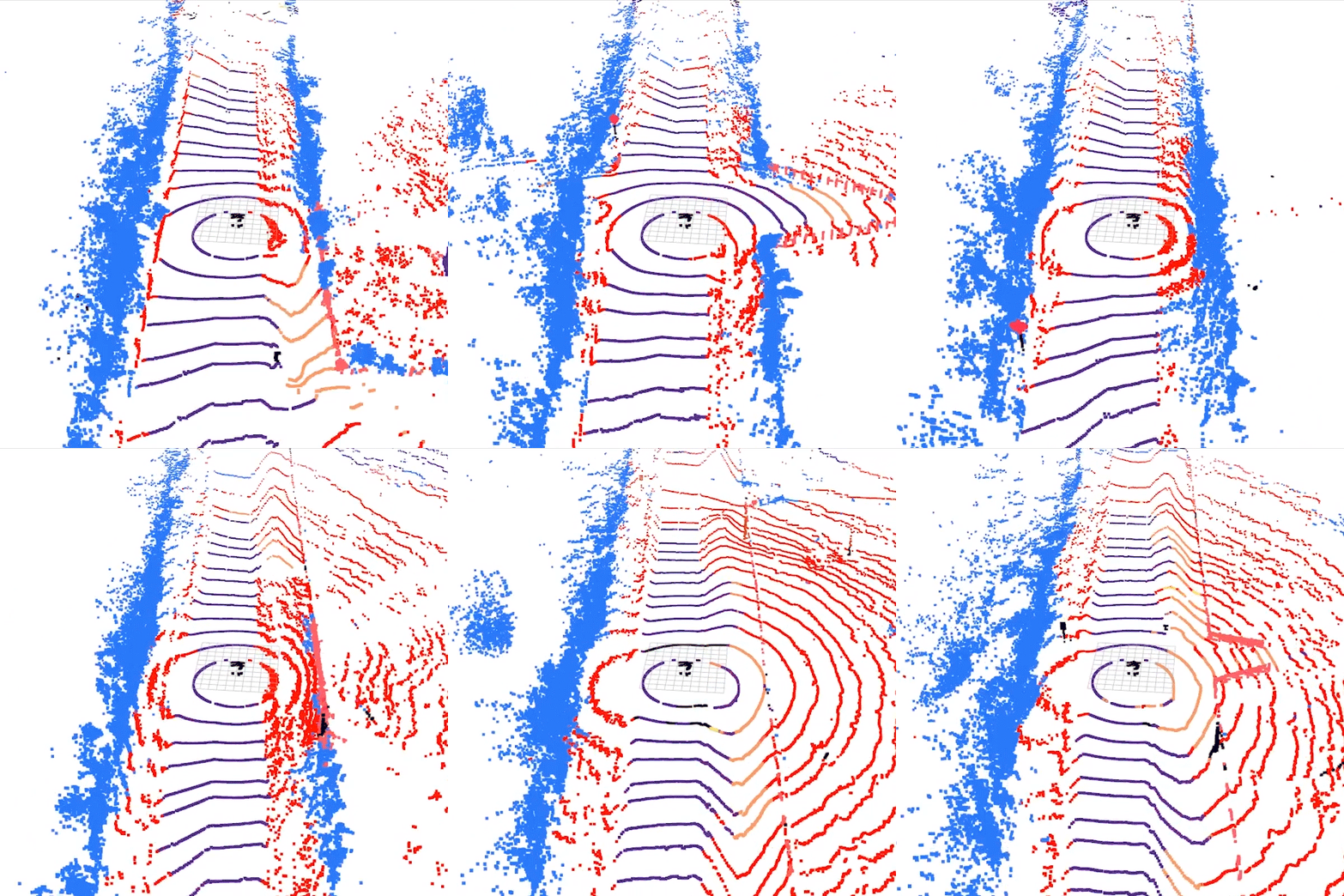
Real-time road segmentation using LiDAR data (code): I undertook the evaluation of various deep learning models, ultimately integrating the SphereFormer model with ROS to facilitate real-time road segmentation utilizing LiDAR data. This application was rigorously tested in a live environment with an automated vehicle, showcasing the potential for enhanced navigational safety.
Comprehensive Data Extraction Pipeline (code): I designed and implemented a comprehensive data extraction pipeline that invinvorporates camera-based detection, 2D-to-3D data fusion, and object tracking to generate a detailed dataset for the analysis of automated vehicle safety and the formulation of regulatory standards.
Implementation of control algorithm and Satety Testing: I conducted safety testing on the control and acturation systems of automated vehicles for rural environments in Rantoul, IL.
Through these contributions, I aimed to push the boundaries of what’s possible with automated driving technologies, ensuring they can be safely and effectively integrated into our transportation systems, particularly in environments that present unique challenges with less infrustructure supports.
Yanlin Zhang
Ph.D. Candidate
My research interests lies in the intersection of behavioral science and mixed autonomy traffic flow.